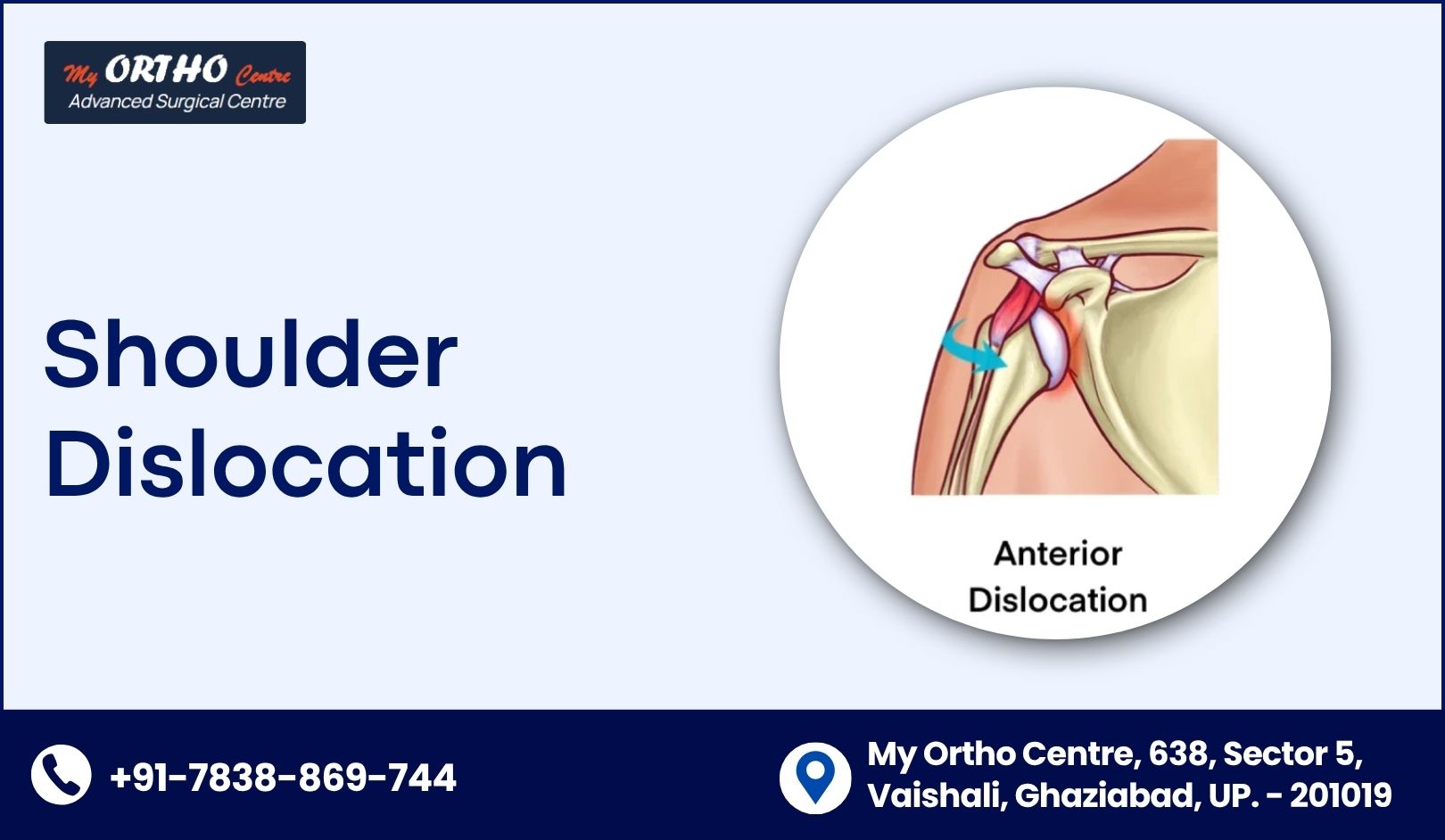
A shoulder dislocation isn’t just a painful injury — for many people, it becomes a recurring nightmare. Recurrent shoulder dislocation means the joint repeatedly slips out of its socket, often with less force each time. For athletes, gym-goers, and even active professionals, this instability can affect confidence, limit movement, and reduce performance.
At My Ortho Centre, led by Dr. Mohit Madan — recognized as the best shoulder surgeon in Delhi, Noida, and Ghaziabad — we specialize in providing both non-surgical and surgical treatments for shoulder instability using the most advanced arthroscopic and minimally invasive techniques.
Understanding the Shoulder Joint: Why It’s Prone to Dislocation
The shoulder joint (glenohumeral joint) is the most mobile joint in the human body.
It allows rotation, lifting, and reaching in multiple directions — but that same flexibility comes at a cost.
-
Ball-and-Socket Mechanism: The “ball” (head of the humerus) fits into the “socket” (glenoid cavity) of the shoulder blade.
-
Support System: Stability depends on muscles, ligaments, tendons, and the labrum — a cartilage rim that deepens the socket.
-
When Instability Occurs: A traumatic injury, fall, or repetitive strain can damage these stabilizers, causing the humeral head to slip out — a dislocation.
When this happens repeatedly, the condition is termed recurrent shoulder dislocation or chronic shoulder instability.
Common Causes & Risk Factors
Recurrent shoulder dislocation usually follows an initial injury that was either inadequately treated or resulted in structural damage. Common causes include:
-
Sports Injuries: Contact sports (football, basketball, wrestling) and overhead activities (cricket, tennis, swimming).
-
Trauma: A fall, accident, or sudden jerk causing a forceful twist of the arm.
-
Genetic Laxity: Some people have naturally loose ligaments, making them more prone to dislocations.
-
Previous Dislocation: Each subsequent episode weakens the capsule, increasing recurrence risk.
-
Inadequate Rehabilitation: Skipping post-injury physiotherapy leads to poor muscle control.
-
Bone Defects: Damage to the glenoid rim (bony socket) or humeral head (Hill-Sachs lesion) reduces joint stability.
Young, active males under 30 years old are most at risk — especially those involved in athletics or gym training.
Symptoms of Recurrent Shoulder Dislocation
A person with recurrent dislocation often experiences:
-
Frequent episodes of the shoulder “slipping out” or feeling unstable
-
Sharp pain and swelling during movement
-
Weakness and loss of shoulder strength
-
Limited range of motion, especially overhead
-
Clicking or grinding sensations in the shoulder
-
Anxiety or fear of moving the arm (“apprehension sign”)
If untreated, recurrent dislocation can lead to cartilage damage, labral tears, and early arthritis.
Diagnosis and Evaluation
At My Ortho Centre, diagnosis begins with a detailed clinical assessment by Dr. Mohit Madan, who evaluates shoulder stability, muscle strength, and joint alignment.
Diagnostic Tests Include:
-
X-rays: To identify bone fractures or Hill-Sachs lesions.
-
MRI (Magnetic Resonance Imaging): Reveals labral tears, capsule stretching, and rotator-cuff injuries.
-
CT Scan: Provides detailed 3D imaging of bone loss or deformities.
-
Arthroscopy: A minimally invasive technique to visually inspect the shoulder joint and confirm internal damage.
Proper diagnosis ensures the treatment plan is personalized to your condition.
Non-Surgical Treatment Options
Not every patient requires surgery. For mild instability or first-time dislocations, conservative management is effective.
Immobilization
After the initial dislocation, the shoulder is kept in a sling for 2–4 weeks to allow soft-tissue healing.
Physiotherapy for Shoulder Instability
Once pain reduces, physiotherapy focuses on:
-
Strengthening rotator cuff muscles
-
Restoring range of motion
-
Improving scapular (shoulder-blade) stability
-
Proprioceptive training (joint awareness)
At My Ortho Centre, our physiotherapists design customized rehabilitation programs under Dr. Mohit Madan’s supervision.
Lifestyle and Activity Modification
Avoid high-risk sports and overhead movements until stability returns.
Bracing
Shoulder braces may provide temporary support during physical activities.
However, repeated dislocations often require surgical correction to repair damaged structures.
Surgical Treatment Options for Recurrent Shoulder Dislocation
If non-surgical methods fail, surgery aims to restore stability by repairing or reconstructing the damaged capsule, ligaments, and labrum.
1️⃣ Arthroscopic Bankart Repair
-
Most common procedure for anterior instability
-
Surgeon reattaches the torn labrum to the glenoid using anchors
-
Performed via keyhole incisions with minimal scarring
-
Shorter recovery period and faster rehabilitation
2️⃣ Latarjet Procedure
-
Recommended when bone loss is significant
-
Transfers a small piece of the coracoid bone to the glenoid rim
-
Provides mechanical stability and prevents further dislocations
3️⃣ Capsular Shift or Plication
-
Tightens the loose shoulder capsule by folding and suturing the stretched tissue
4️⃣ Remplissage Procedure
-
Used for large Hill-Sachs lesions
-
Fills the bone defect using rotator cuff tissue to prevent engagement
5️⃣ Open Shoulder Stabilization
-
Considered for complex or revision cases where arthroscopy alone may not suffice
???? Advanced Shoulder Care at My Ortho Centre
Under Dr. Mohit Madan’s expertise, My Ortho Centre offers cutting-edge diagnostic and surgical facilities:
-
Advanced Arthroscopic Surgery Suites
-
3D Imaging & Intraoperative Navigation
-
Personalized Physiotherapy & Rehabilitation Programs
-
Minimally Invasive Surgical Options
-
Holistic Post-Surgery Care
Whether you are in Delhi, Noida, or Ghaziabad, our center provides complete shoulder care — from evaluation to recovery — ensuring patients regain full mobility with minimal downtime.
About Dr. Mohit Madan — Best Shoulder Surgeon in Delhi, Noida & Ghaziabad
Dr. Mohit Madan is a highly acclaimed orthopedic and joint reconstruction specialist known for his excellence in shoulder, hip, and knee surgeries.
With over 25 years of experience and hundreds of successful shoulder reconstructions, he is regarded among the best shoulder surgeons in Delhi, Noida, and Ghaziabad.
Why Patients Trust Dr. Madan
-
Expertise in arthroscopic shoulder stabilization
-
Use of latest biological implants for natural healing
-
Patient-specific planning with 3D modeling
-
Emphasis on pain-free rehabilitation and return to sports
-
Exceptional success rate and long-term joint stability
Rehabilitation & Physiotherapy After Surgery
Recovery after shoulder stabilization requires commitment and structured therapy.
Phase 1 (0–4 Weeks):
-
Sling immobilization for protection
-
Passive movements under supervision
-
Cold compress to reduce swelling
Phase 2 (4–8 Weeks):
-
Gradual active motion
-
Light isometric exercises
-
Gentle stretching
Phase 3 (8–12 Weeks):
-
Resistance bands to strengthen rotator cuff muscles
-
Scapular control training
Phase 4 (3–6 Months):
-
Sport-specific conditioning
-
Full range of motion restored
At My Ortho Centre, our rehabilitation experts monitor your progress, ensuring safe recovery and preventing re-injury.
Prevention Tips for Future Shoulder Dislocations
-
Follow your physiotherapist’s exercise routine consistently.
-
Avoid overhead or contact sports until cleared.
-
Warm up properly before workouts.
-
Strengthen rotator cuff and scapular muscles.
-
Maintain correct posture during work and sleep.
-
Avoid sudden jerky arm movements.
Consistency and discipline are the keys to long-term shoulder health.
Frequently Asked Questions (FAQs)
Q1. What is recurrent shoulder dislocation?
It’s a condition where the shoulder repeatedly slips out of its socket due to weakened ligaments or bone damage.
Q2. How many times can a shoulder dislocate before surgery is needed?
If dislocation occurs more than once and interferes with daily activities, surgery is usually recommended for stability.
Q3. Is surgery painful?
Modern arthroscopic techniques minimize pain. With anesthesia and post-operative care, discomfort is manageable.
Q4. How long is the recovery time after surgery?
Complete recovery usually takes 3–6 months, depending on healing and rehabilitation.
Q5. Can physiotherapy alone treat shoulder instability?
For mild cases, yes. Physiotherapy strengthens muscles and improves stability. However, recurrent dislocations often need surgical repair.
Q6. Why choose My Ortho Centre for shoulder treatment?
Because Dr. Mohit Madan offers advanced diagnostic facilities, world-class arthroscopic surgery, and personalized rehabilitation — all under one roof.
Q7. Is the surgery safe for athletes and young patients?
Yes. Many athletes successfully return to full activity after stabilization surgery with proper rehab.
Q8. Can recurrent shoulder dislocation cause arthritis?
Repeated dislocations can damage cartilage, increasing the risk of arthritis if not treated promptly.
Conclusion
Recurrent shoulder dislocation is not something to ignore — it requires specialized evaluation and treatment. Early intervention can prevent permanent damage, restore confidence, and help you return to your favorite activities pain-free.
At My Ortho Centre, Dr. Mohit Madan, one of the best shoulder surgeons in Delhi, Noida, and Ghaziabad, offers world-class care using state-of-the-art arthroscopic techniques and personalized rehabilitation plans.
If you or someone you know struggles with shoulder instability,
???? Book your consultation today with Dr. Mohit Madan at My Ortho Centre and take the first step toward lasting shoulder stability.