That dull ache along the front of your lower leg after a run. The sharp discomfort that appears when climbing stairs. The soreness that refuses to go away despite rest.
Many people dismiss shin pain as a minor issue, assuming it will disappear on its own. However, persistent shin pain can be a warning sign from your body that something isn't right. Ignoring it may lead to worsening symptoms, reduced mobility, and in some cases, serious bone or muscle injuries.
Whether you're an athlete, fitness enthusiast, working professional, or someone who spends long hours standing, understanding the causes of shin pain can help you take the right steps toward recovery.
Let's explore everything you need to know about shin pain, its causes, symptoms, diagnosis, and the most effective treatment options.
What Is Shin Pain?
Shin pain refers to discomfort felt along the front or inner side of the shinbone (tibia), the larger bone located in the lower leg.
The pain may develop gradually or appear suddenly after physical activity. While some cases are mild and temporary, others can indicate underlying conditions requiring medical attention.
Shin pain is commonly experienced by:
- Runners
- Athletes
- Dancers
- Military personnel
- Individuals who stand for prolonged periods
- People who have recently increased their exercise intensity
Common Causes of Shin Pain
1. Shin Splints (Medial Tibial Stress Syndrome)
This is the most common cause of shin pain. Shin splints occur when the muscles, tendons, and bone tissue around the tibia become inflamed due to repetitive stress.
Common Triggers:
- Running on hard surfaces
- Sudden increase in workout intensity
- Improper footwear
- Flat feet or abnormal foot mechanics
Symptoms:
- Dull aching pain along the shinbone
- Pain during or after exercise
- Mild swelling in the lower leg
2. Stress Fracture
A stress fracture is a tiny crack in the shinbone caused by repetitive force and overuse. Unlike shin splints, stress fractures usually produce more localized pain.
Symptoms:
- Sharp pain at a specific spot
- Pain that worsens with activity
- Tenderness when touched
- Swelling around the affected area
Stress fractures require prompt evaluation by an orthopedic specialist to prevent further damage.
3. Muscle Strain
Overstretching or overloading the muscles surrounding the shin can result in muscle strains.
Symptoms:
- Tightness in the calf or shin muscles
- Pain during movement
- Muscle weakness
- Cramping sensations
4. Tendinitis
Inflammation of the tendons around the ankle and lower leg can contribute to shin pain.
Symptoms:
- Pain near the ankle and shin
- Swelling
- Stiffness during movement
- Increased discomfort after activity
5. Compartment Syndrome
This occurs when pressure builds up within the muscle compartments of the lower leg. Although less common, it can become a serious condition if left untreated.
Symptoms:
- Severe pain
- Tightness in the leg
- Numbness or tingling
- Weakness in the foot
Immediate medical attention may be required in severe cases.
Risk Factors for Shin Pain
Certain factors can increase the likelihood of developing shin pain:
- Running long distances
- Wearing worn-out shoes
- Flat feet
- High arches
- Sudden increase in exercise intensity
- Poor training techniques
- Excess body weight
- Weak leg muscles
- Inadequate stretching
Understanding these risk factors can help prevent future injuries.
Signs You Should Not Ignore
Many people continue exercising despite pain, which often worsens the condition. Seek professional evaluation if you experience:
- Pain lasting more than a few days
- Swelling in the lower leg
- Difficulty walking
- Pain even at rest
- Sharp or localized pain
- Numbness or tingling sensations
Early diagnosis often leads to faster recovery and prevents complications.
How Shin Pain Is Diagnosed
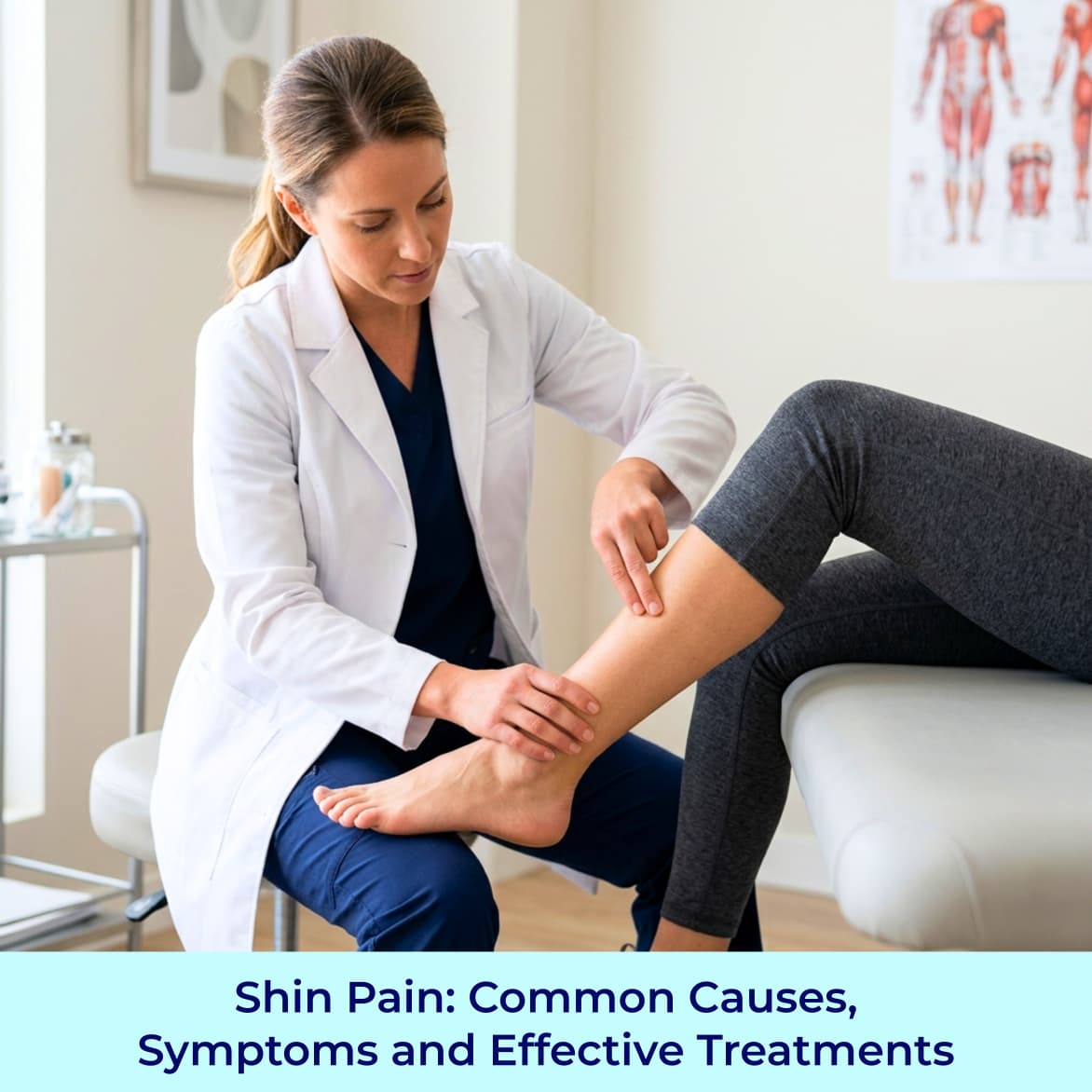
An orthopedic specialist will typically begin with a detailed clinical examination and review of activity levels, medical history, and symptoms.
Diagnostic tests may include:
- Physical Examination: Assessment of tenderness, swelling, flexibility, and gait patterns.
- X-Rays: Useful for identifying fractures and bone abnormalities.
- MRI Scan: Provides detailed images of muscles, tendons, ligaments, and stress injuries.
- CT Scan (Sometimes recommended for complex cases)
Accurate diagnosis is essential because treatment differs depending on the underlying cause.
Effective Treatment Options for Shin Pain
- Rest and Activity Modification: Reducing activities that trigger pain allows the affected tissues to heal. Switching temporarily to low-impact exercises such as swimming or cycling can help maintain fitness.
- Ice Therapy: Applying ice packs for 15–20 minutes several times a day can reduce inflammation and pain.
- Compression and Elevation: These methods help minimize swelling and improve circulation.
- Physiotherapy: A structured physiotherapy program can:
- Improve flexibility
- Strengthen leg muscles
- Correct movement patterns
- Reduce the risk of recurrence
Orthotic Support
Custom shoe inserts can help correct foot alignment and reduce stress on the shinbone.
Medications
Anti-inflammatory medications may be recommended to manage pain and swelling when appropriate.
Surgical Treatment
Surgery is rarely needed but may be considered for severe stress fractures or chronic compartment syndrome.
Can Shin Pain Be Prevented?
Absolutely. Simple preventive measures can significantly reduce the risk of shin injuries.
Prevention Tips
- Wear proper footwear
- Increase exercise intensity gradually
- Warm up before workouts
- Stretch regularly
- Strengthen leg and calf muscles
- Avoid overtraining
- Maintain a healthy body weight
- Replace running shoes regularly
Small changes in daily habits can make a significant difference.
Recovery Timeline: How Long Does Shin Pain Last?
Recovery depends on the cause and severity.
- Mild Shin Splints – 2–4 weeks
- Moderate Cases – 4–8 weeks
- Stress Fractures – 6–12 weeks or longer
- Post-Surgical Recovery – Varies depending on the procedure
Following professional advice and completing rehabilitation exercises can speed up recovery and reduce the risk of recurrence.
When Should You Consult an Orthopedic Specialist?
If shin pain is affecting your daily activities, fitness routine, or quality of life, professional evaluation is important.
Delaying treatment may allow a minor issue to develop into a more significant injury.
Individuals looking for an experienced orthopedic doctor in Vaishali or a trusted bone and joint care centre in Ghaziabad should seek specialized assessment to identify the exact cause of their symptoms and receive a personalised treatment plan.
Expert Orthopedic Care in Ghaziabad
For comprehensive diagnosis and treatment of shin pain, sports injuries, fractures, joint disorders, and musculoskeletal conditions, Dr Mohit Madan at My Ortho Centre provides advanced orthopedic care focused on accurate diagnosis, effective treatment, and long-term recovery.
Recognised by many patients as one of the Best Orthopedic in Ghaziabad, Dr Mohit Madan and the team at My Ortho Centre emphasise evidence-based treatment approaches designed to help patients return to their normal activities safely and confidently.