Surgery Is Just the Beginning—Recovery Happens Through Rehabilitation
Joint surgery can be life-changing. Whether it's a knee replacement, hip replacement, ACL reconstruction, or fracture fixation, these procedures are designed to reduce pain, restore mobility, and improve quality of life. However, the success of any orthopedic surgery does not depend solely on what happens in the operating room.
A common misconception among patients is that once the surgery is completed, recovery will happen automatically. In reality, surgery addresses the structural problem, but physiotherapy plays a vital role in restoring strength, movement, balance, and function.
Without proper rehabilitation, patients may experience prolonged stiffness, muscle weakness, limited mobility, and slower recovery. This is why physiotherapy is considered an essential part of post-surgical care by every experienced orthopedic doctor in Vaishali and leading bone and joint care centre in Ghaziabad.
---
Why Is Physiotherapy Important After Joint Surgery?
Following surgery, the body naturally undergoes a healing process that includes inflammation, swelling, pain, and temporary loss of strength. During this period, patients often hesitate to move the operated joint due to discomfort or fear of injury.
While rest is important, excessive inactivity can delay recovery and increase the risk of complications.
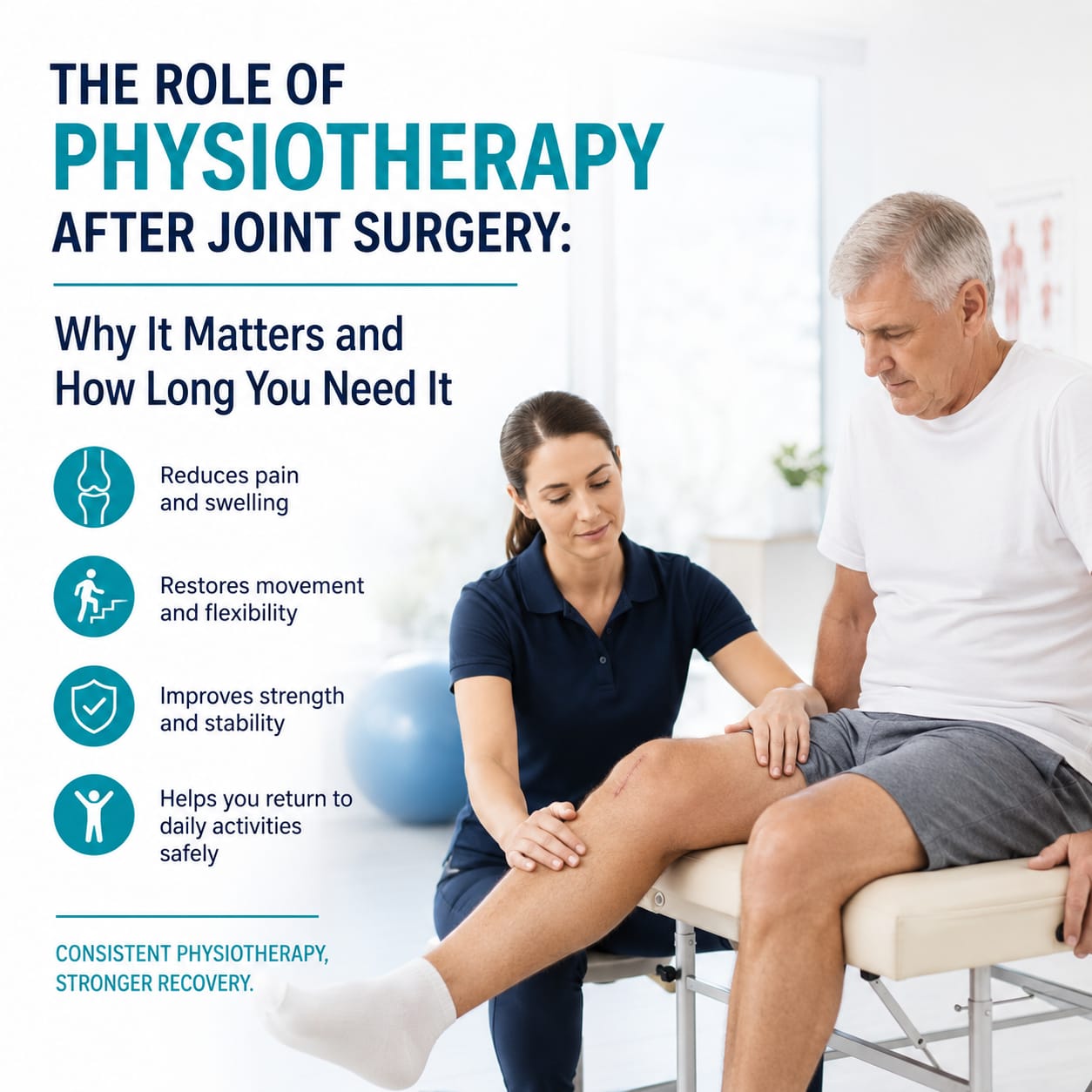
Physiotherapy helps patients recover safely by:
✔ Restoring joint movement
✔ Improving muscle strength
✔ Reducing pain and swelling
✔ Enhancing flexibility
✔ Improving balance and coordination
✔ Preventing stiffness
✔ Supporting a faster return to daily activities
A structured rehabilitation program ensures that the operated joint regains its normal function while minimizing long-term limitations.
---
What Happens to the Body After Joint Surgery?
Every surgical procedure places temporary stress on the surrounding muscles, tendons, and soft tissues.
Common post-surgical challenges include:
Joint Stiffness
Patients often notice difficulty bending or straightening the affected joint after surgery.
Muscle Weakness
Muscles surrounding the operated area may weaken due to reduced activity before and after surgery.
Swelling and Inflammation
Swelling is a natural response to surgery and may temporarily limit movement.
Reduced Confidence While Walking
Many patients feel uncertain about putting weight on the operated limb.
Physiotherapy addresses each of these challenges through carefully planned exercises and rehabilitation techniques.
---
Physiotherapy After Knee Replacement Surgery
Knee replacement surgery is one of the most successful orthopedic procedures performed today. However, achieving the best results requires commitment to rehabilitation.
Physiotherapy after knee replacement focuses on:
✔ Improving knee bending and straightening
✔ Strengthening the thigh muscles
✔ Restoring walking ability
✔ Improving balance
✔ Reducing stiffness
✔ Increasing overall mobility
Patients who actively participate in physiotherapy often recover faster and regain independence sooner than those who neglect rehabilitation.
---
Physiotherapy After Hip Replacement Surgery
Hip replacement surgery can provide significant relief from chronic pain and stiffness. However, rebuilding strength and restoring movement are essential for long-term success.
Rehabilitation after hip replacement helps patients:
✔ Walk confidently
✔ Improve hip flexibility
✔ Strengthen surrounding muscles
✔ Restore balance and coordination
✔ Return safely to daily activities
A well-planned physiotherapy program also helps prevent abnormal walking patterns that can develop after surgery.
---
Physiotherapy After ACL Reconstruction
For active individuals and athletes, physiotherapy is often just as important as the surgical procedure itself.
After ACL reconstruction, rehabilitation focuses on:
✔ Restoring knee stability
✔ Improving strength
✔ Regaining range of motion
✔ Enhancing agility
✔ Preparing for a safe return to sports
Rushing the recovery process or skipping physiotherapy can increase the risk of reinjury.
---
How Long Is Physiotherapy Needed After Surgery?
One of the most frequently asked questions is:
"How long will rehabilitation take?"
The answer varies depending on several factors, including:
✔ Type of surgery
✔ Age of the patient
✔ Overall health condition
✔ Fitness level
✔ Individual recovery progress
Typical Recovery Timelines
Knee Replacement Surgery
Most patients require physiotherapy for approximately 6–12 weeks, although strengthening exercises may continue for several months.
Hip Replacement Surgery
Rehabilitation typically lasts between 4–10 weeks depending on the patient's recovery goals and activity level.
ACL Reconstruction
Recovery often requires 4–9 months of structured rehabilitation before returning to high-impact sports.
Fracture and Trauma Surgery
The duration depends on the severity of the injury and the healing process.
Recovery should always be guided by an orthopedic specialist and physiotherapist rather than a fixed timeline.
---
What Happens If Physiotherapy Is Ignored?
Skipping physiotherapy can negatively affect surgical outcomes.
Potential consequences include:
❌ Persistent stiffness
❌ Muscle weakness
❌ Limited joint mobility
❌ Poor balance
❌ Delayed recovery
❌ Reduced function
❌ Increased risk of complications
Even a technically successful surgery may fail to deliver its full benefits if rehabilitation is neglected.
---
Tips for Faster and Better Recovery
Patients can improve recovery outcomes by following a few important guidelines:
✔ Attend all physiotherapy sessions
✔ Perform home exercises regularly
✔ Follow medical advice carefully
✔ Stay physically active within recommended limits
✔ Maintain a healthy diet
✔ Stay hydrated
✔ Avoid prolonged bed rest unless advised
Consistency is often the most important factor in achieving successful rehabilitation.
---
The Team Behind a Successful Recovery
Recovery from joint surgery is a collaborative effort.
The best outcomes are achieved when patients work closely with:
✔ Orthopedic surgeons
✔ Physiotherapists
✔ Rehabilitation specialists
✔ Family members and caregivers
This multidisciplinary approach helps patients regain confidence, mobility, and independence as quickly and safely as possible.
---
Conclusion
Joint surgery can significantly improve mobility and quality of life, but surgery alone is only one part of the recovery journey. Physiotherapy serves as the bridge between surgical treatment and a successful return to normal activities.
By restoring strength, flexibility, balance, and function, rehabilitation helps patients achieve the full benefits of their procedure while reducing the risk of complications. Whether recovering from knee replacement, hip replacement, ACL reconstruction, or trauma surgery, physiotherapy remains one of the most important investments in long-term joint health.
For anyone planning orthopedic surgery or currently recovering from one, following a structured rehabilitation program under the guidance of an experienced orthopedic doctor in Vaishali and a trusted bone and joint care centre in Ghaziabad can make a remarkable difference in recovery and overall outcomes.