Knee arthroscopy surgery is no longer searched only by athletes or people with major accidents. In Ghaziabad today, working professionals, young adults, school athletes, gym-goers, and even middle-aged individuals search this term after months of unresolved knee pain, swelling, or instability. What usually starts as a minor twist or strain slowly turns into difficulty climbing stairs, pain while sitting cross-legged, or a knee that feels unreliable while walking.
In 2026, people will no longer search only for surgery. They search for clarity. Is surgery really needed? Why does the knee still hurt after physiotherapy? Can ligament injuries heal on their own? Is arthroscopy safe? These questions dominate search behaviour, and the answers matter because knee injuries, when ignored, silently damage the joint.
This guide explains knee arthroscopy in simple terms, when it becomes necessary, and how it plays a critical role in treating ligament injuries, sports trauma, and meniscus damage for patients in Ghaziabad.
Understanding Knee Pain Beyond Painkillers and Rest
Most knee injuries do not feel serious at first. A sudden twist while playing badminton. A fall from stairs. A sharp pain during squats at the gym. People rest, apply ice, take painkillers, and continue life. Weeks pass, but the pain returns. Swelling appears after activity. The knee feels weak or unstable.
This is where patients begin searching for sports injury knee treatment or knee ligament injury repair. What many do not realize is that internal knee structures like ligaments and cartilage do not heal the way muscles do. Without proper diagnosis, the injury worsens silently.
What Exactly Is Knee Arthroscopy Surgery
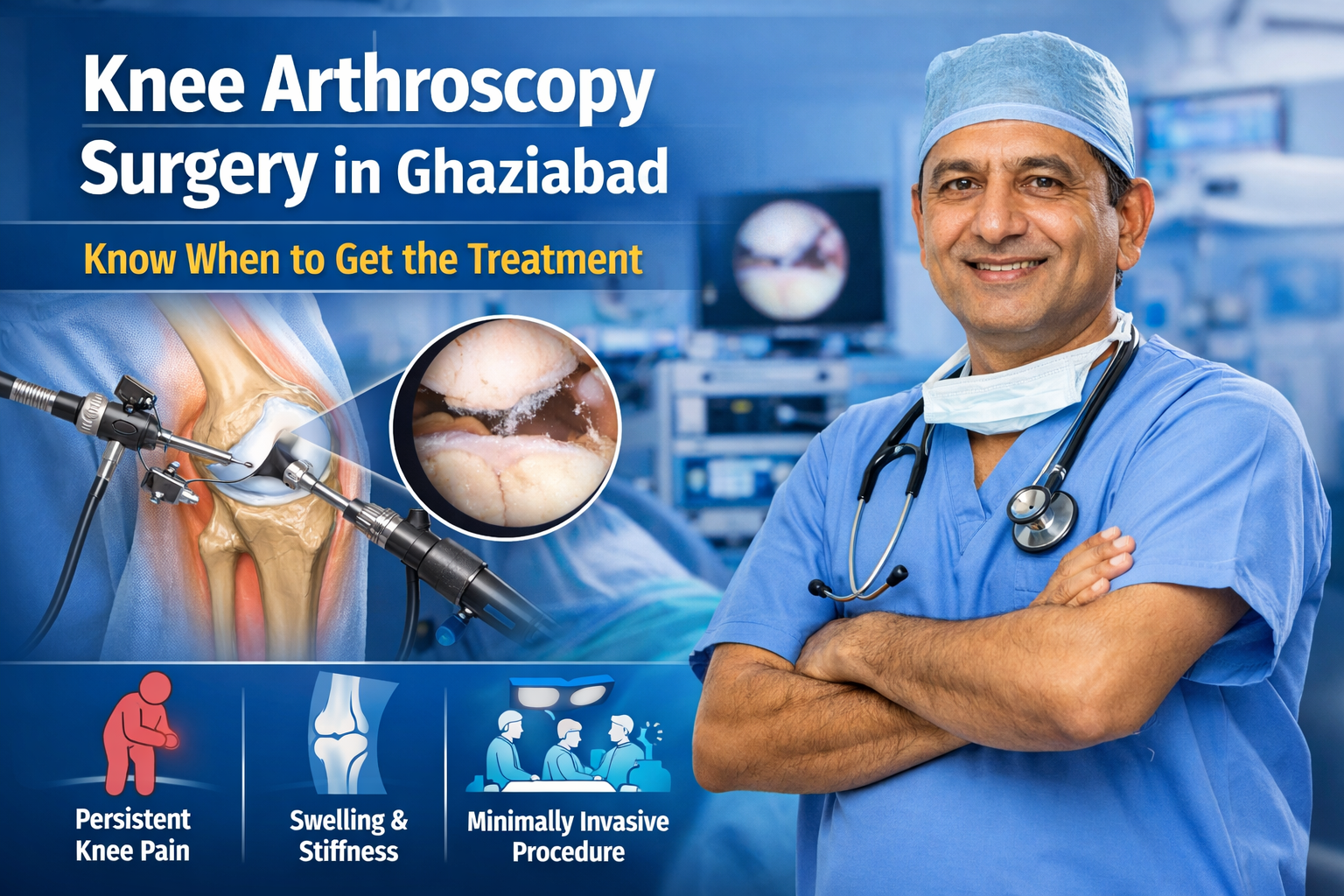
Knee arthroscopy surgery is a minimally invasive procedure that allows doctors to look inside the knee joint using a small camera. Through tiny incisions, the surgeon can diagnose and treat problems involving cartilage, ligaments, and the meniscus.
Unlike traditional open surgery, arthroscopic knee surgery causes minimal tissue damage, less pain, and faster recovery. It allows precise repair rather than guesswork. This is why it has become the preferred approach for many knee conditions today.
When Arthroscopic Knee Surgery Becomes Necessary
Patients often ask why surgery is needed when pain comes and goes. The answer lies in mechanical damage. When knee structures are torn or damaged, no amount of rest can restore them completely.
Arthroscopic knee surgery is commonly advised when there is persistent swelling, knee locking, repeated giving way, or pain that does not respond to physiotherapy. It becomes essential in cases involving ligament tears, meniscus injuries, and sports-related trauma.
ACL Injuries and the Role of ACL Reconstruction Surgery
One of the most searched knee-related procedures today is ACL reconstruction surgery. The anterior cruciate ligament is crucial for knee stability, especially during twisting or pivoting movements.
ACL injuries often occur during football, basketball, running, or sudden directional changes. Patients report a popping sound, immediate swelling, and long-term instability. Walking may feel possible, but running or sports feel unsafe.
Without ACL reconstruction surgery, the knee remains unstable, leading to secondary damage like meniscus tears and early arthritis. Arthroscopy allows precise reconstruction of the ligament with minimal disruption to surrounding tissues.
Meniscus Tears and Why They Should Not Be Ignored
The meniscus acts as a shock absorber inside the knee. Tears can happen due to sports injuries, sudden twisting, or age-related degeneration. Many patients search for meniscus tear surgery after experiencing knee locking or pain while squatting.
Ignoring meniscus injuries leads to cartilage wear and joint degeneration. Meniscus tear surgery performed arthroscopically helps preserve healthy tissue while repairing or trimming the damaged portion. Early treatment often prevents future joint replacement.
Sports Injury Knee Treatment Has Changed With Arthroscopy
Sports injuries are no longer limited to professional athletes. Weekend players, gym enthusiasts, school students, and fitness-conscious individuals frequently seek sports injury knee treatment.
Knee arthroscopy surgery has transformed sports injury care by offering accurate diagnosis, targeted repair, and faster rehabilitation. Instead of prolonged rest and uncertainty, arthroscopy identifies the exact injury and treats it precisely.
Knee Ligament Injury Repair Beyond the ACL
While ACL injuries are well known, other ligaments like the PCL, MCL, and LCL also play crucial roles. Injuries to these ligaments often occur during accidents or contact sports.
Knee ligament injury repair through arthroscopy allows surgeons to assess the severity and treat partial or complete tears appropriately. Some injuries require reconstruction, while others respond well to guided rehabilitation.
Why Delaying Arthroscopy Can Harm the Knee Long-Term
One of the biggest misconceptions is that pain relief means healing. Many patients feel better temporarily, only to experience worsening symptoms months later. Delayed treatment allows instability and abnormal joint movement to damage cartilage.
This leads to early arthritis, chronic pain, and reduced mobility. Knee arthroscopy surgery, when performed at the right time, prevents these long-term consequences.
Recovery After Knee Arthroscopy Surgery
Recovery depends on the type of injury treated. Most patients walk on the same day or within a few days. Swelling reduces gradually, and physiotherapy begins early.
For ligament repairs and ACL reconstruction surgery, structured rehabilitation is essential. Recovery focuses on restoring strength, balance, and confidence in knee movement. Most patients return to daily activities well before they expect.
Choosing the Right Knee Arthroscopy Surgeon in Ghaziabad
Patients searching for knee arthroscopy surgery in Ghaziabad often feel overwhelmed by options. What truly matters is experience, diagnostic accuracy, and personalized treatment planning.
A reliable surgeon evaluates clinical symptoms alongside imaging, explains treatment choices clearly, and stays involved throughout recovery. Arthroscopy is not just a procedure; it is a treatment journey that demands skill and judgment.
Why Local Specialized Care Matters for Knee Injuries
Patients often search for sports injury knee treatment or knee ligament injury repair near me. Local specialized orthopedic centers offer continuity of care, easy follow-ups, and individualized attention.
In Ghaziabad, accessing advanced arthroscopic care locally reduces delays, improves rehabilitation adherence, and ensures better long-term outcomes.
My Ortho Centre and Advanced Knee Arthroscopy Care in Ghaziabad
My Ortho Centre in Ghaziabad provides comprehensive care for knee injuries using modern arthroscopic techniques. Led by Dr. Mohit Madan (MBBS, MS Ortho, FJRA, MCh Ortho), the centre focuses on precise diagnosis, evidence-based treatment, and long-term joint preservation.
Dr. Mohit Madan’s advanced training in joint reconstruction and arthroscopy ensures that patients receive care aligned with global orthopedic standards. From ACL reconstruction surgery to meniscus tear surgery and complex knee ligament injury repair, treatment plans are customized to each patient’s condition and lifestyle.
Final Thoughts on Knee Arthroscopy Surgery in Ghaziabad
Getting your knee arthroscopy surgery in Ghaziabad is not about choosing surgery quickly. It is about choosing the right treatment at the right time. Persistent knee pain, instability, or locking are signs that internal structures may be damaged.
Modern arthroscopic knee surgery offers accurate diagnosis, targeted repair, and faster recovery compared to traditional methods. For patients dealing with ligament injuries, meniscus damage, or sports-related knee trauma, timely intervention protects long-term joint health.
For those searching for reliable sports injury knee treatment, ACL reconstruction surgery, or expert knee ligament injury repair in Ghaziabad, My Ortho Centre offers care rooted in experience, transparency, and patient well-being.
Taking knee pain seriously today can prevent years of discomfort tomorrow.