Is Your Back Pain Trying to Tell You Something?
Back pain is no longer a problem limited to older adults. Today, it has become one of the most common health concerns among people in their 20s, 30s, and 40s. Whether you're working long hours at a desk, lifting heavy objects, spending hours driving, or simply maintaining poor posture throughout the day, your spine silently bears the burden.
Many people ignore back pain, assuming it will disappear on its own. They rely on painkillers, home remedies, or temporary rest. While these may provide short-term relief, they often fail to address the real cause of the pain. Over time, untreated back pain can interfere with daily activities, reduce mobility, and significantly affect your quality of life.
Understanding what causes back pain is the first step toward finding the right treatment and preventing long-term complications.
What Exactly Is Back Pain?
Back pain refers to discomfort that occurs anywhere along the spine—from the neck to the lower back. However, the lower back (lumbar spine) is the most commonly affected area because it supports most of the body's weight and is constantly involved in movements such as walking, bending, lifting, and twisting.
The pain may be mild and occasional or severe enough to make simple daily tasks difficult.
Some people experience:
- A dull aching sensation
- Sharp or stabbing pain
- Muscle stiffness
- Burning pain
- Pain that spreads to the hips or legs
- Difficulty standing, walking, or bending
Identifying the underlying cause is essential because different conditions require different treatment approaches.
Common Causes of Back Pain
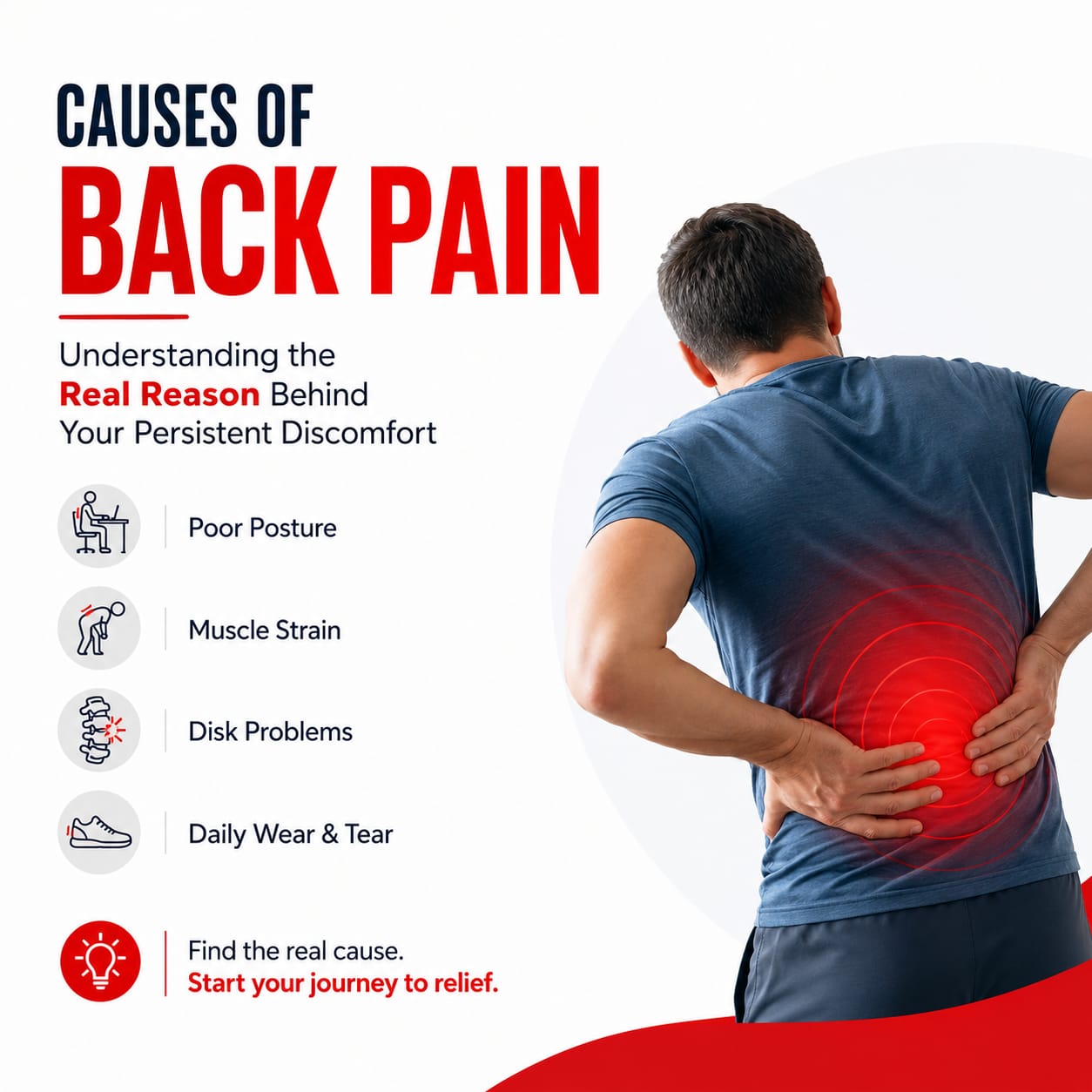
1. Poor Posture
One of the leading causes of back pain is poor posture.
Sitting for hours while slouching, looking down at mobile phones, or working on laptops without proper ergonomic support places continuous stress on the spine.
Over time, this strain weakens muscles and increases pressure on spinal discs, leading to chronic pain.
Signs include:
- Pain after prolonged sitting
- Shoulder and neck stiffness
- Lower back discomfort at the end of the day
2. Muscle or Ligament Strain
Sudden movements, lifting heavy weights incorrectly, intense exercise, or repetitive physical work can overstretch muscles and ligaments.
This often causes:
- Muscle spasms
- Sharp pain
- Swelling
- Difficulty moving comfortably
Fortunately, mild strains usually recover with proper rest and guided rehabilitation.
3. Herniated (Slipped) Disc
Between each vertebra lies a soft cushioning disc.
Sometimes these discs bulge or rupture, pressing against nearby nerves. This condition is commonly known as a slipped disc.
Symptoms may include:
- Lower back pain
- Pain radiating down the leg (Sciatica)
- Tingling
- Numbness
- Muscle weakness
Ignoring these symptoms can lead to worsening nerve compression.
4. Age-Related Degenerative Changes
As we age, the spine naturally undergoes wear and tear.
Conditions such as:
- Degenerative Disc Disease
- Osteoarthritis
- Facet Joint Arthritis
- Spinal Stenosis
can gradually develop and become major sources of chronic back pain.
Early diagnosis can significantly slow disease progression.
5. Poor Core Muscle Strength
Your abdominal and back muscles act as natural support for the spine.
Weak core muscles force the spinal joints and discs to bear extra stress, increasing the risk of injury and chronic pain.
This is especially common among individuals with sedentary lifestyles.
6. Obesity
Excess body weight places continuous pressure on the lower spine.
Over time, this extra load accelerates joint degeneration and increases the likelihood of chronic back pain.
Maintaining a healthy weight greatly reduces spinal stress.
7. Lack of Physical Activity
Sitting all day weakens muscles and reduces spinal flexibility.
Ironically, both excessive physical work and too little movement can contribute to back pain.
Simple daily stretching and regular exercise help maintain spinal health.
8. Osteoporosis
Osteoporosis weakens bones, making the vertebrae more vulnerable to fractures.
Compression fractures caused by weakened spinal bones often result in severe back pain, especially among older adults.
Early diagnosis and treatment can help prevent these fractures.
9. Sciatica
Sciatica occurs when the sciatic nerve becomes irritated or compressed.
Instead of pain remaining in the back, it often travels through:
- Buttocks
- Thigh
- Calf
- Foot
The pain may feel like burning, electric shocks, or tingling sensations.
10. Stress and Mental Health
Many people don't realise that emotional stress can also contribute to back pain.
Stress causes muscles to remain tense for prolonged periods, especially around the neck, shoulders, and lower back.
Poor sleep, anxiety, and chronic stress often worsen existing pain.
Who Is at Greater Risk?
You may have a higher risk of developing back pain if you:
- Work long hours on a computer
- Frequently lift heavy objects
- Drive for extended periods
- Have poor posture
- Are overweight
- Smoke
- Exercise very little
- Have weak core muscles
- Are above 40 years of age
- Have previous spinal injuries
Recognizing these risk factors allows you to take preventive measures before serious problems develop.
Warning Signs You Should Never Ignore
While mild back pain often improves within a few days, certain symptoms require immediate medical evaluation.
Consult an orthopedic specialist if you experience:
- Pain lasting more than two weeks
- Severe pain after an injury
- Pain radiating into the legs
- Numbness or tingling
- Difficulty walking
- Weakness in the legs
- Loss of bladder or bowel control
- Fever with back pain
- Unexplained weight loss
These symptoms may indicate a more serious spinal condition requiring prompt treatment.
How Is the Cause Diagnosed?
A proper diagnosis begins with a detailed medical history and physical examination.
Depending on your symptoms, your orthopedic doctor may recommend:
- Digital X-rays
- MRI Scan
- CT Scan
- Blood Tests
- Nerve Conduction Studies (when required)
Accurate diagnosis helps ensure that treatment targets the actual problem rather than simply masking the pain.
Treatment Depends on the Cause
Back pain treatment varies according to its underlying cause.
Depending on the diagnosis, treatment may include:
- Activity modification
- Posture correction
- Physiotherapy
- Guided exercises
- Anti-inflammatory medications
- Muscle relaxants
- Regenerative therapies in selected cases
- Image-guided injections when appropriate
- Surgical intervention only when absolutely necessary
Most patients recover successfully without surgery when treatment begins early.
Simple Ways to Prevent Back Pain
Healthy habits can significantly reduce your risk of developing chronic back problems.
Follow these simple tips:
- Maintain correct posture while sitting and standing.
- Exercise regularly to strengthen core muscles.
- Lift heavy objects using your legs instead of your back.
- Avoid sitting continuously for long hours.
- Stretch every 30–45 minutes during desk work.
- Maintain a healthy body weight.
- Sleep on a supportive mattress.
- Stay physically active every day.
Small lifestyle improvements often make a remarkable difference in spinal health.
When Should You See an Orthopedic Specialist?
Back pain that keeps returning should never be ignored.
If your pain is affecting work, sleep, walking, or daily activities, consulting an experienced orthopedic specialist can help identify the exact cause and prevent long-term complications.
Patients looking for an orthopedic doctor in Vaishali or a trusted bone and joint care centre in Ghaziabad should seek a comprehensive evaluation rather than relying on temporary pain relief.
At My Ortho Centre, advanced diagnostic methods and evidence-based orthopedic care help identify the root cause of back pain so that treatment focuses on lasting recovery instead of temporary symptom control. Under the expertise of Dr Mohit Madan, Orthopedic, patients receive personalized care for spinal conditions, joint disorders, sports injuries, and musculoskeletal problems. Many patients also consider the centre among the destinations to consult the Best Orthopedic in Ghaziabad for comprehensive bone and joint care.