Hip pain can gradually take away the freedom to walk, climb stairs, or even perform simple daily activities. For people living with advanced hip arthritis or severe joint damage, Total Hip Replacement is often the most effective solution. In recent years, the Direct Anterior Approach (DAA) has gained significant attention because of its muscle-sparing technique and the potential to improve recovery after surgery.
Many patients have heard about DAA Hip Replacement but are unaware of the advantages it may offer compared to traditional surgical approaches. While every patient is different and no surgical technique is suitable for everyone, understanding the benefits of this modern procedure can help individuals make informed decisions about their treatment.
At My Ortho Center, patients receive comprehensive evaluation and personalized treatment for hip disorders. Dr. Mohit Madan, an experienced Orthopedic doctor in Vaishali, carefully assesses each patient's condition before recommending the most appropriate surgical approach.
What Is DAA Hip Replacement?
The Direct Anterior Approach (DAA) is a minimally invasive technique used for Total Hip Replacement. Unlike traditional hip replacement methods that require cutting through muscles to access the hip joint, DAA allows the surgeon to reach the joint through a natural interval between muscles.
By preserving major muscles around the hip, this approach aims to reduce soft tissue trauma while maintaining joint stability. However, the success of the procedure depends on several factors, including the patient's anatomy, overall health, and the surgeon's expertise.
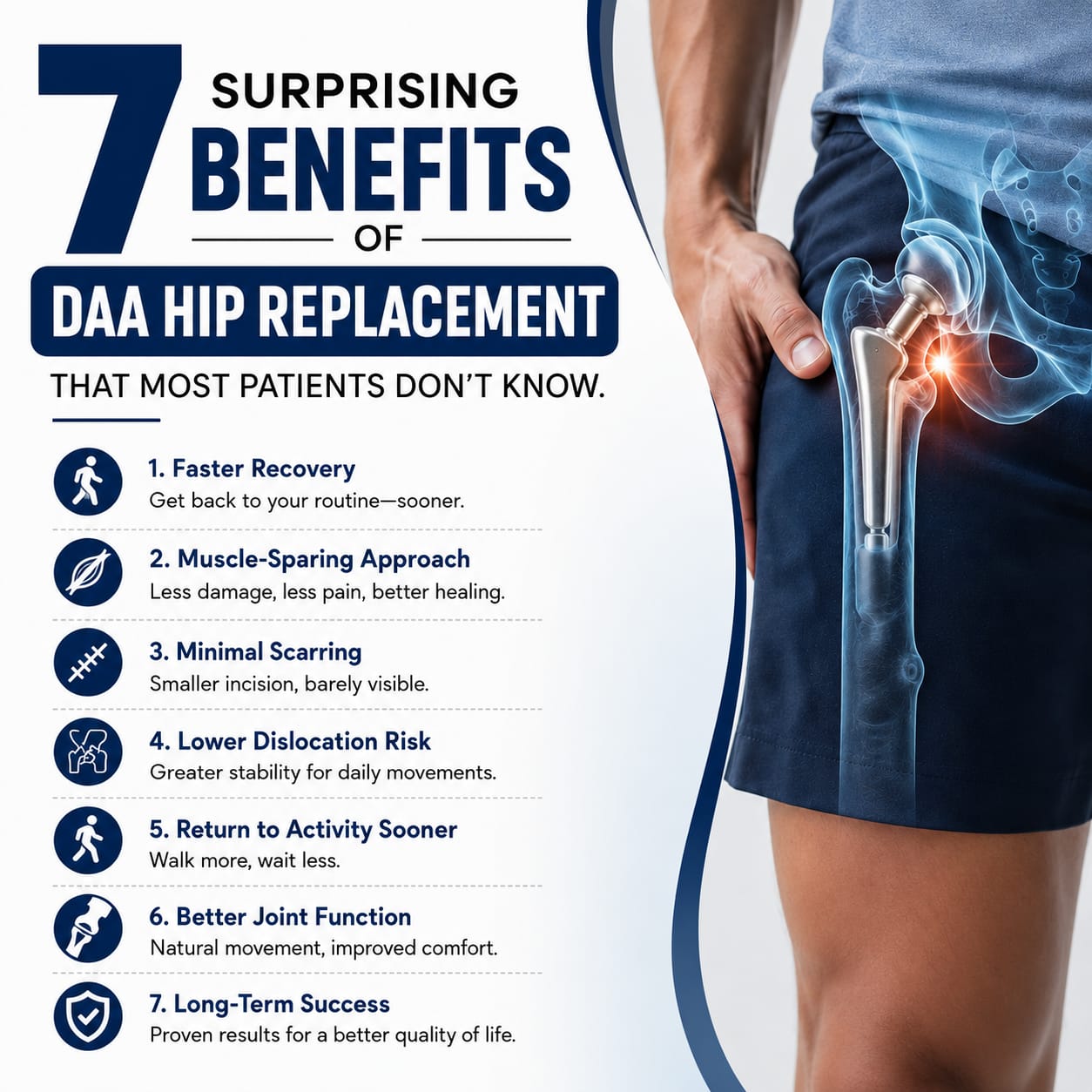
1. Muscle-Sparing Surgical Technique
One of the biggest advantages of DAA Hip Replacement is that it avoids cutting major muscles around the hip joint.
Instead, the surgeon carefully works between natural muscle planes to access the damaged joint.
Potential benefits of this muscle-preserving approach include:
- Reduced soft tissue trauma
- Better muscle function after surgery
- Improved early mobility
- Less disruption to surrounding structures
Because important muscles remain largely intact, many patients experience greater confidence during the initial stages of rehabilitation.
2. Potential for Faster Early Recovery
Although every patient's recovery timeline is unique, many individuals undergoing DAA Hip Replacement are able to begin walking soon after surgery under medical supervision.
Several factors contribute to this early recovery, including:
- Reduced muscle damage
- Better joint stability
- Early physiotherapy
- Improved pain control
It is important to remember that recovery also depends on age, general health, bone quality, and commitment to rehabilitation exercises.
3. Lower Risk of Hip Dislocation
Hip stability is a major concern after Total Hip Replacement.
Since the Direct Anterior Approach preserves many of the muscles responsible for stabilizing the hip joint, some patients may have a lower risk of postoperative dislocation compared with certain traditional approaches.
This can provide greater confidence while performing routine daily activities during the recovery period. However, patients should always follow their surgeon's movement precautions and rehabilitation guidelines.
4. Smaller Incision with Reduced Soft Tissue Damage
Another benefit that many patients appreciate is the minimally invasive nature of the Direct Anterior Approach.
While incision size varies depending on the patient's anatomy and surgical requirements, DAA generally minimizes unnecessary soft tissue disruption.
Possible advantages include:
- Reduced tissue trauma
- Less postoperative swelling
- Better cosmetic appearance
- Easier early rehabilitation
The primary goal, however, is not a smaller scar but achieving a safe and successful hip replacement with optimal implant positioning.
5. Improved Early Mobility
One of the main objectives of hip replacement surgery is to restore movement and reduce pain.
Because DAA preserves important muscles around the hip, many patients find it easier to participate in physiotherapy during the early recovery phase.
With proper rehabilitation, patients often work toward:
- Walking independently
- Climbing stairs
- Sitting comfortably
- Returning to routine activities
- Improving overall quality of life
Physiotherapy remains an essential part of recovery regardless of the surgical approach used.
6. Better Functional Outcomes for Daily Activities
Modern hip replacement is not only about relieving pain—it is also about restoring function.
Many patients undergoing DAA Hip Replacement report improved confidence while performing everyday activities such as
- Getting in and out of a chair
- Walking longer distances
- Using stairs
- Standing for extended periods
- Resuming recreational activities after medical clearance
Successful outcomes depend on accurate implant positioning, muscle strength, rehabilitation, and regular follow-up with the orthopedic surgeon.
7. Personalized Treatment with Advanced Surgical Techniques
No two patients have the same hip anatomy or medical history. The Direct Anterior Approach allows experienced surgeons to combine modern surgical techniques with individualized treatment planning.
Before recommending DAA Hip Replacement, several factors are carefully evaluated, including:
- Severity of arthritis
- Bone quality
- Hip deformity
- Previous surgeries
- Overall medical condition
- Lifestyle and activity level
This personalized approach helps ensure that the chosen surgical technique is appropriate for the patient's specific needs.
Who Is a Suitable Candidate for DAA Hip Replacement?
DAA Hip Replacement may be considered for patients with:
- Advanced hip osteoarthritis
- Rheumatoid arthritis affecting the hip
- Avascular necrosis of the femoral head
- Hip fractures requiring replacement
- Persistent hip pain that has not improved with conservative treatment
Not every patient is an ideal candidate for the Direct Anterior Approach. A detailed clinical examination and imaging studies help determine whether this technique is appropriate.
Recovery After DAA Hip Replacement
Recovery varies from person to person, but a typical rehabilitation timeline includes:
First Week
- Pain management
- Assisted walking
- Gentle physiotherapy
- Hip mobility exercises
Two to Six Weeks
- Improved walking ability
- Reduced swelling
- Increased independence
- Progressive strengthening exercises
Six Weeks to Three Months
- Better balance and coordination
- Improved muscle strength
- Return to many daily activities
- Continued rehabilitation under professional guidance
Following the prescribed physiotherapy program is one of the most important factors in achieving a successful long-term outcome.
Choosing an Experienced Orthopedic Specialist
The success of any hip replacement surgery depends not only on the surgical approach but also on the expertise of the operating surgeon.
Patients looking for the best orthopedic doctor in Ghaziabad should consider experience in joint replacement, evidence-based treatment, advanced surgical techniques, and comprehensive rehabilitation support.
As an experienced Orthopedic doctor in Vaishali, Dr. Mohit Madan provides personalized evaluation and treatment for patients with hip arthritis and other complex joint disorders. At My Ortho Center, a trusted Bone and Joint Care Center in Ghaziabad, every patient receives an individualized treatment plan designed to restore mobility, reduce pain, and improve long-term quality of life.
Final Thoughts
The Direct Anterior Approach has transformed modern hip replacement by focusing on muscle preservation, precise implant placement, and early functional recovery. Although no surgical technique is universally superior for every patient, DAA offers several potential benefits that may contribute to improved mobility and patient satisfaction when performed in appropriate candidates.
If persistent hip pain is limiting your daily activities, consulting an experienced orthopedic specialist is the first step toward understanding your treatment options. A comprehensive evaluation, the right surgical approach, and a structured rehabilitation program remain the foundation of achieving long-lasting pain relief and an active lifestyle.